Screen time for kids: my view, as a dad and a software developer
By Dirk Wessels
Device access for children is a big topic at the moment. Governments are banning children and teenagers from social media, and algorithms keep getting better at giving us more of what we “want”. That “we” includes our children.
Why parents reach for the screen
There is another side to it, too. Many parents are stressed and stretched to their limit. I have watched a friend get home at six in the evening to a true onslaught: two children making up for ten hours without Mum, when a lifetime of events has happened in those ten hours and all of it needs to be shared in the first two minutes. It is a lot!
Some screen time gives you, the parent, a moment to breathe. There is nothing wrong with that.
The price of convenience
Unfortunately, that convenience has a price. This is my personal opinion, of course, but I think that constantly feeding a child the next hit, and leading them to what they should think next, which is what devices are designed to do, costs something. A child never has to use their own imagination when the next exciting thing is fed to them, one click after another. And your imagination is like any other part of your brain: if it is not used, it has no reason to develop further. The same goes for thinking for yourself.
What I am building instead
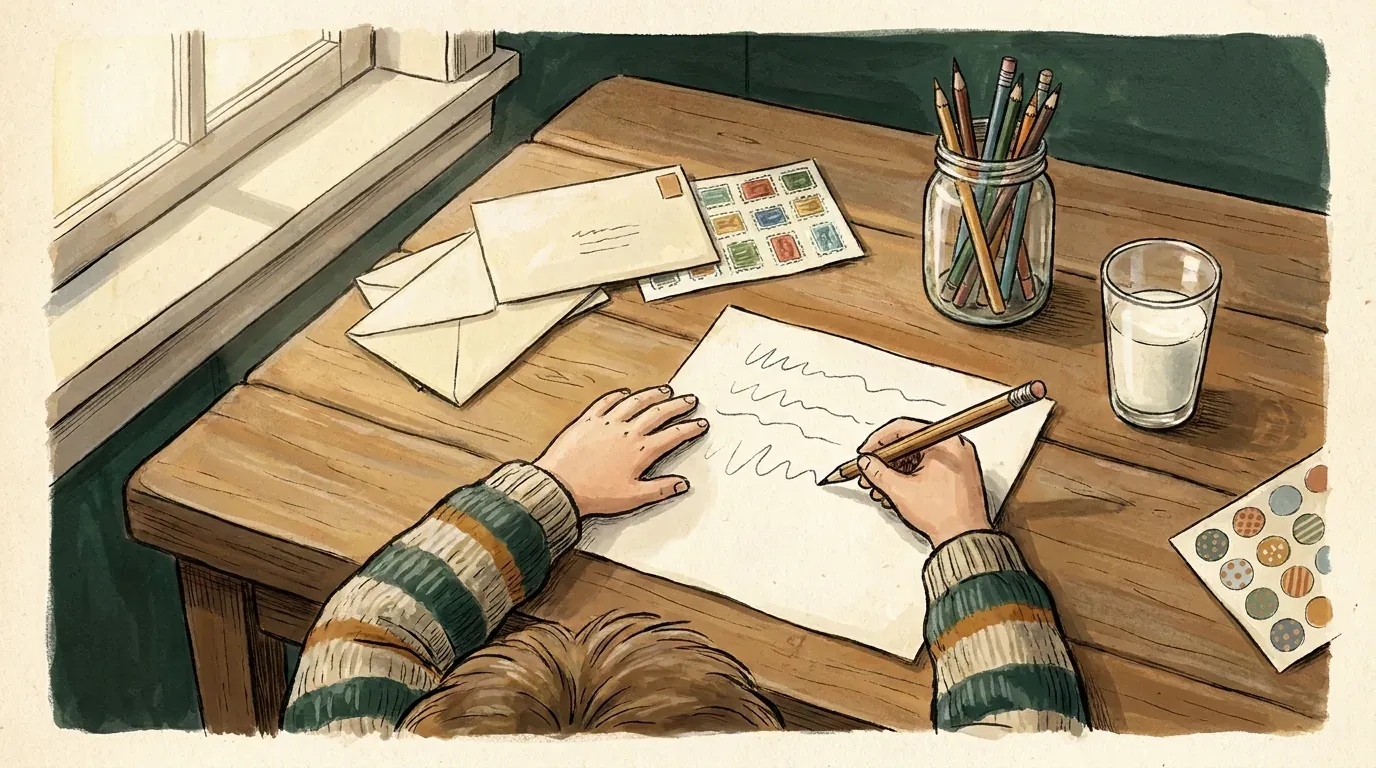
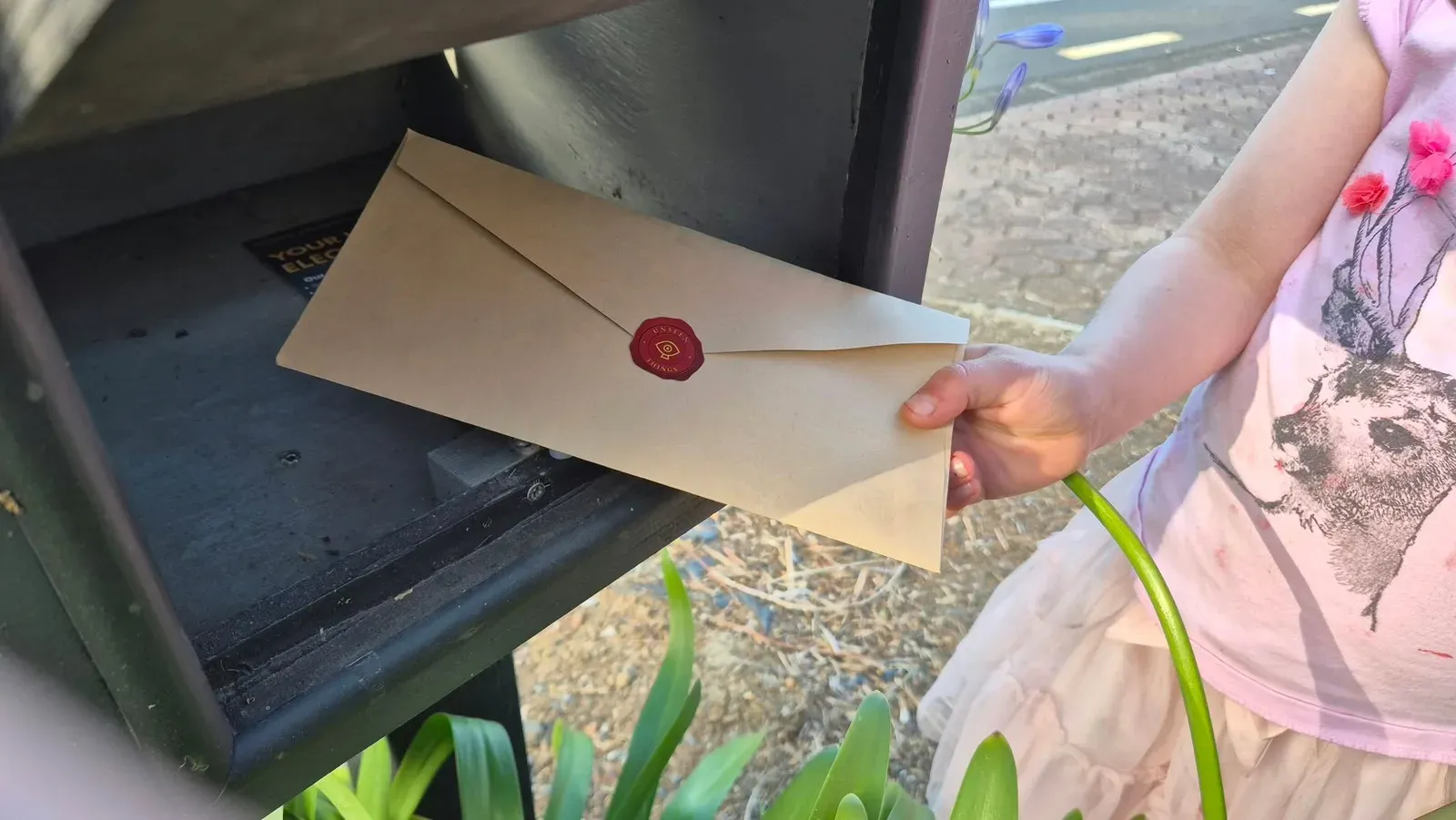
With the Society of Unseen Things I am trying to build exactly the opposite. Every letter plants a thought and tells a small piece of a bigger story, but most of it comes to life in your child’s imagination. Doing it all through letters on paper helps. Paper is slower than electronics by nature, and that leaves time for their imagination to explore.
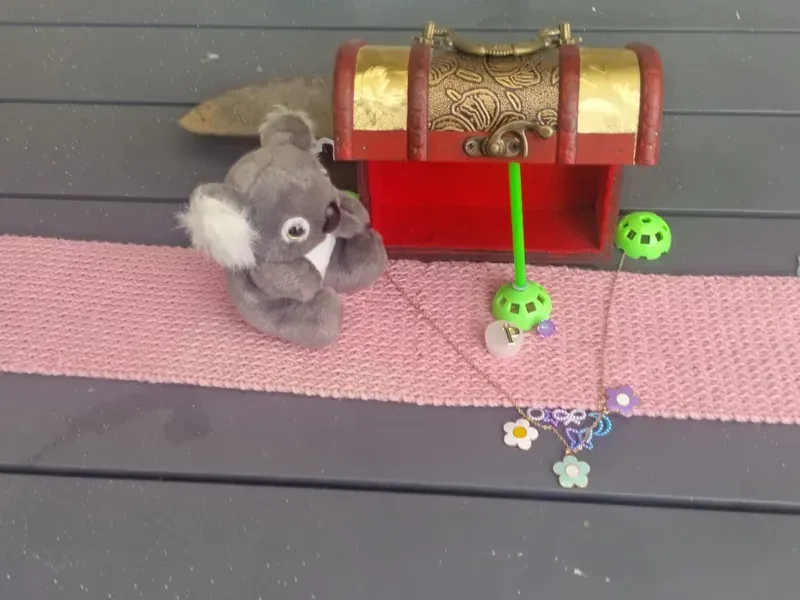
In the same way, the Society’s missions ask children to do things physically: run around and look for things, collect and build, not sit still and tap buttons on a device.
I feel very strongly about this. I think it is healthy for a child to develop their imagination, to go exploring and to make things happen for themselves.
But I am not against technology
I am a software developer, after all! I think technology is a tool, a means to an end. We should use it to improve a specific outcome, not let it become the whole of that outcome.
The QR code on our weekly letters is a good example. If this is a screen-free adventure, why is there a QR code on every letter, and why do some letters have a short animated video behind it?
First, the videos are only one to two minutes long, and they have one specific purpose: to get across what is in the letter to children who cannot yet read at that level, and whose parents might not have the time or energy to read it with them that evening. So it improves a specific outcome. It takes a minute or two to explain the letter and build some excitement around it. After that, the child still has to go back to the letter to do the actual activities; they just have a frame of reference for it now.
The other reason I am comfortable offering the videos is that they are completely optional. The letter contains everything that is in the video, and more. If you would rather your child did not watch it, simply don’t scan the QR code.
So what is my view on screen-free time?
I suppose it is this: not being dogmatic and preventing all screen time, but thinking about the outcome you want and how best to achieve it. For me, that means teaching our children to think for themselves and imagine things for themselves, rather than always being led by someone else’s version. Can a device help with that? Sure, as long as it stays a tool and does not become the whole experience.