Letter-writing activities for kids: ten ideas that get a reply
By Dirk Wessels
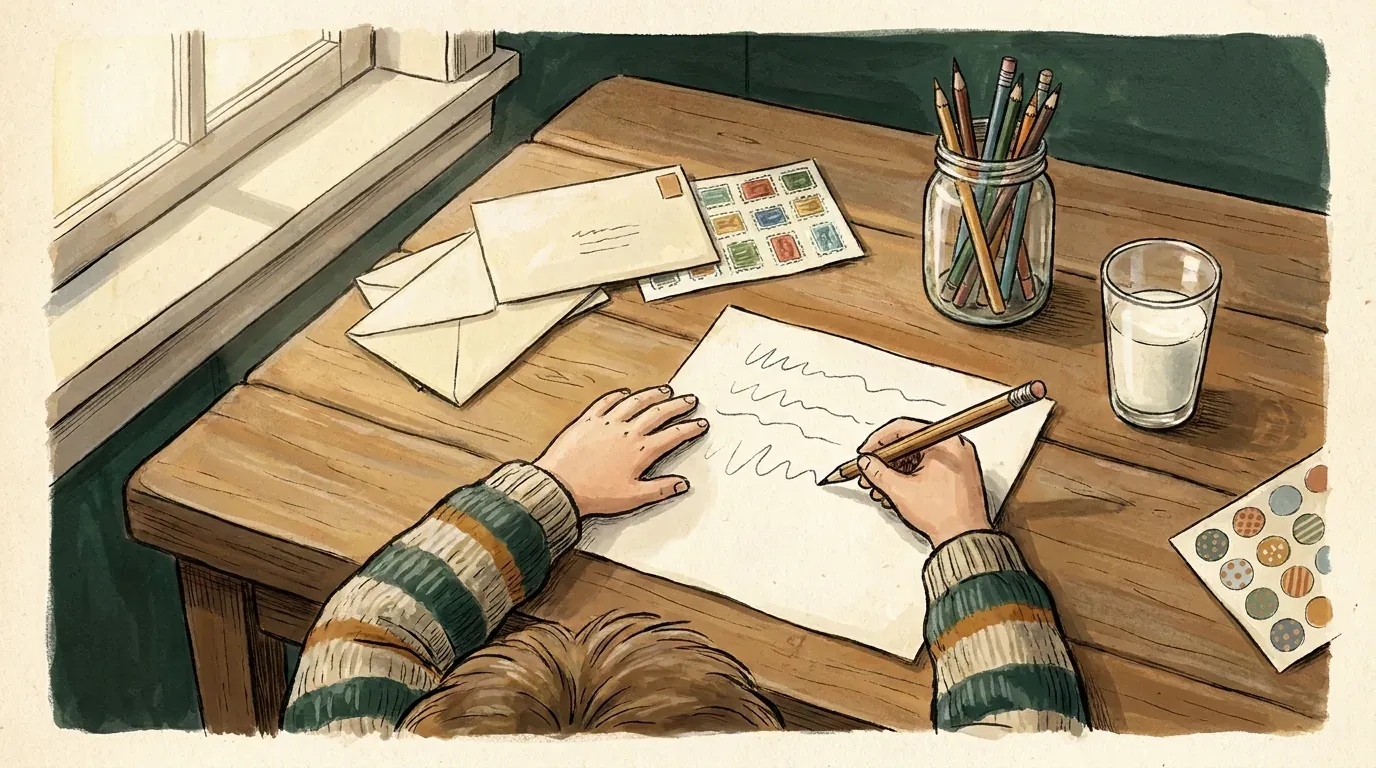
Our youngest boy, Tim, was obsessed with mail. Every time we got home he jumped out of the car, emptied the letterbox and handed everything round. Most of it was for my wife. None of it was ever for him.
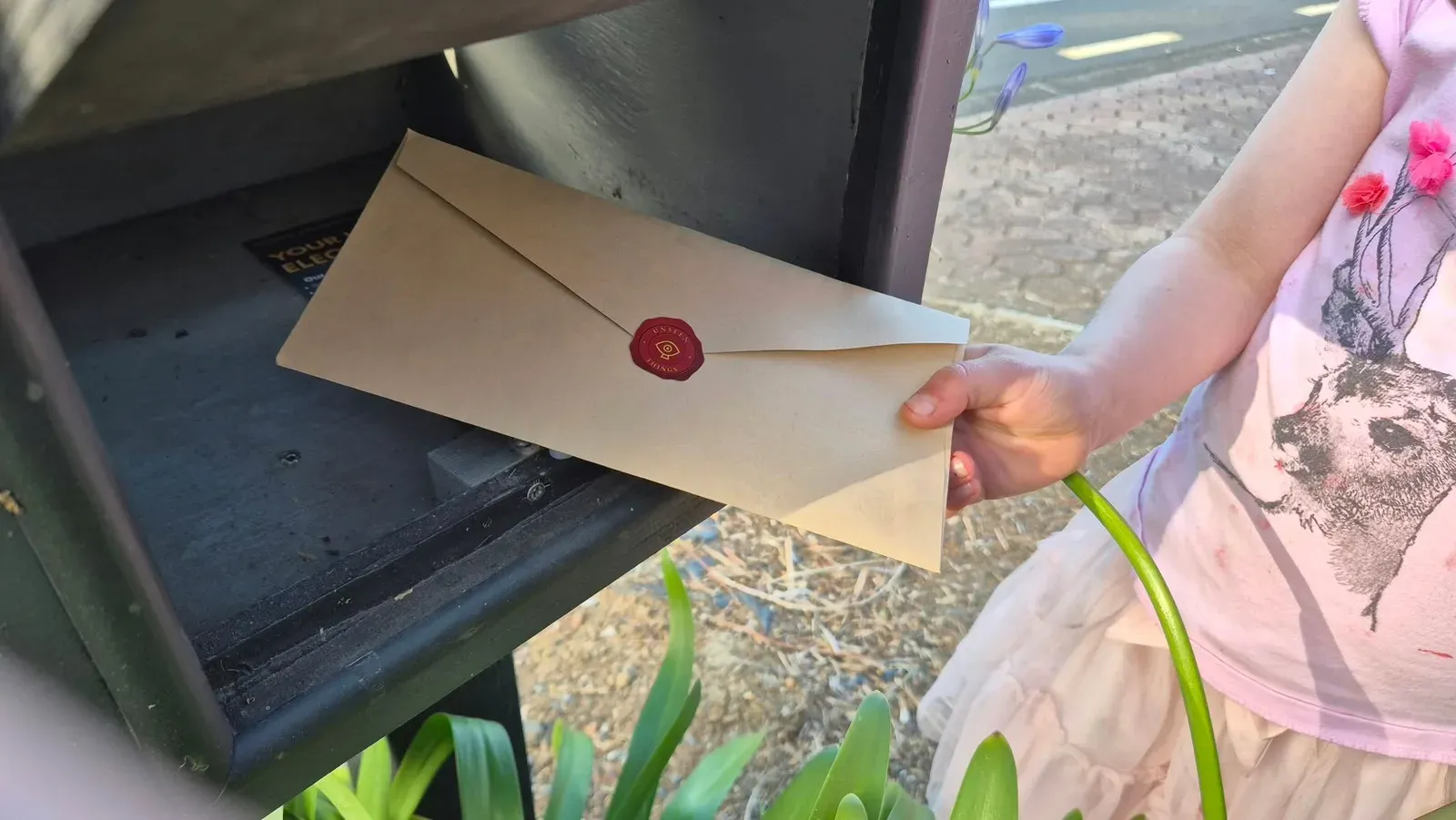
One day I decided he needed to find a letter for himself in there, so I wrote him one. It came from Gunpowder Gore, an officer in a secret organisation, who said he had been watching Tim for a while and thought he would make an excellent agent. His first assignment was to study the insects around the house and report back. I even opened a mailbox in another part of Auckland, on the way to my office, so he could reply without knowing who Gore was.
He wrote back. Then one of his brothers and his sister wanted letters of their own, and I ended up writing to all of them. It kept the family going for a long time. Even the older brothers (yes, we had a quiverful), who didn’t want the letters as such, kept guessing, and kept nagging Mum and me, to find out who Gunpowder Gore was.
So I thought we would put together some ideas for doing something like that yourself. A whole story of a secret society, and a character like Gunpowder Gore, takes effort, so this page focuses on single ideas that will keep your child busy without taking too much of your own time. A worksheet asks a child to write a letter. A real letter asks them to write back. Every idea below has a reader at the other end, and most have a reply on its way. They run roughly from the youngest writers to the oldest.
My mailbox on the other side of town was a bit extreme, so the first ideas below are addressed to real people. In the Society of Unseen Things, the agent (your child) hands their letters to their handler (you), who sends them on to the Society. If you want your child to write to a fictional character, as some of these ideas suggest, you can do the same: just intercept the letter before it is posted.
Letters to real people
Write to a grandparent, and ask them a question Ages 5+
The question is what makes it work. “What was your first pet called?” gets an answer, and an answer gets another letter. For a five-year-old, a drawing with one line dictated to you counts. Warn the grandparent first so the reply comes quickly: a fortnight is a long time when you are six.
Thank-you letters, made into a drawing Ages 5+
After a birthday or Christmas, fold a sheet in half: a drawing of the present on the front, two lines inside. It is a chore when it is a list and a pleasure when it is a picture. One a day, not six in an afternoon.
A pen pal they already know Ages 7+
A cousin in another city, or a friend who has moved away. A stranger pen pal fades after two letters; someone they will see again in the holidays does not. Agree a rhythm between the parents, say one letter a fortnight, and keep stamps by the door.
Write to someone who can change something Ages 8+
The council about the broken swing, the library about a book it should stock, an author about an ending. Adults in offices nearly always answer a child’s letter, and a real reply on letterhead does more for a child’s writing than a term of exercises.
Letters with a secret in them
A cipher wheel and a coded letter Ages 7+
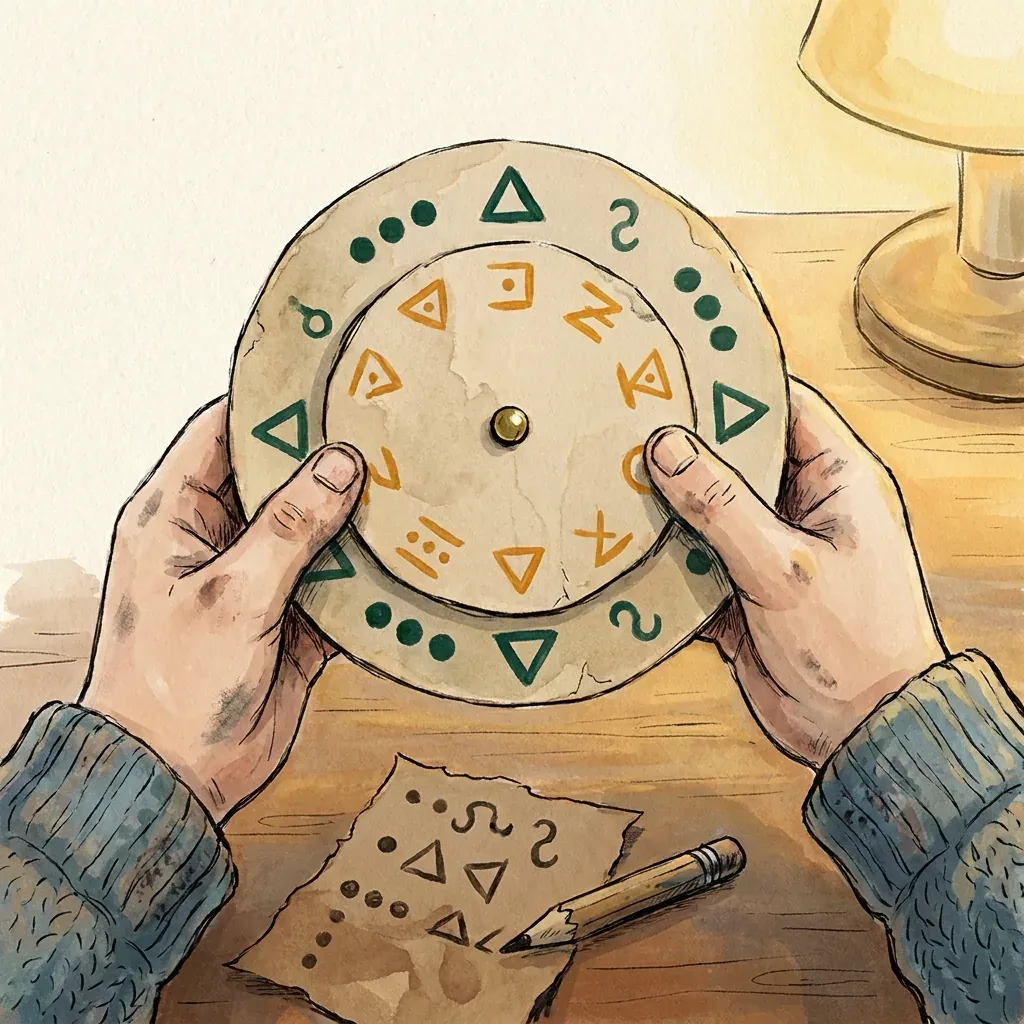
Cut two circles from a cereal box, one a little smaller than the other. Write the alphabet round the edge of each, pin them together through the middle with a split pin, and turn the inner wheel a few letters on. Each letter of your message becomes the one beside it. Send the first coded note yourself and tell them how far to turn the wheel. Younger children can use symbols in place of the inner alphabet.
Letters from a character Ages 5+
This is the one I did, and the one I would tell any parent to try. You write as someone else: a secret agent, a favourite soft toy, a neighbour who is never seen. Children who will not write a sentence for homework will write a page to someone they half believe in.
How to keep it going:
- Give them a job. A character who only says hello gets one reply. A character who needs something counted, found or watched gets a report.
- Give them a way to answer. A box on the porch, a gap in the hedge, a real address. Without one it is a story; with one it is a correspondence.
- Do not get caught. Type it, or print in capitals. Use paper the house does not normally have. Children check.
- Expect the others to want in. If there are brothers and sisters, the second letter you write will be to one of them.
- Write two ahead. The hard part is not the first letter. It is the seventh, on a Sunday night, when you have nothing. Most families stop there.
A treasure hunt of notes Ages 5+
Each note leads to the next hiding place. Once they have followed one, have them write one for you, or for a younger brother or sister. Writing a clue somebody else must solve is hard, careful writing, and they will not notice it is practice.
Letters that need a letterbox
A family post office Ages 5+
A shoebox with a slot cut in the lid, one for each bedroom door, and a rule that the post is collected after dinner. Within a week everybody is writing to everybody. It also works in a classroom, with one box and a different child as postie each day.
Postcards from the backyard Ages 6+
Postcards are short, which suits a child who finds a full page daunting. They do not need a holiday: a drawing of the garden and three lines about what was in it, stamped and posted to someone who will stick it on the fridge.
A letter to their future self Ages 9+
Seal it in an envelope marked with a date a year away: their favourite things now, what they think will have changed, a question for the older them. Older children take this seriously, and opening it a year later is a small event.
What goes in a letter
Five parts, and children like knowing there are only five.
- The date, top right.
- A greeting. “Dear Nana,” and a new line.
- Some news. One thing that happened. One is enough.
- A question. This is the part that gets an answer.
- A sign-off and their name. “Love from” for family, “From” for everyone else.
And a P.S., which is every child’s favourite part once they learn it exists.
When they say “I don’t know what to write”
Give them the first half of a sentence and walk away.
- The best thing that happened this week was…
- You will not believe what the dog did…
- Here is a drawing of…
- I have a question for you:
- When you were my age, did you…
- Next time I see you I want to…
How to address an envelope
Most children have never done it. In New Zealand:
14 Kōwhai Street
Kingsland
Auckland 1021
- The person’s name on the first line, in the middle of the envelope.
- The street number and street on the second.
- The suburb on the third, then the town or city and postcode on the last.
- The stamp in the top right corner.
- Their own address on the back flap, so it can come home if it gets lost.
Then let them post it themselves. Reaching the slot is part of it.
What to expect at each age
- Five and six: drawings with words, and words dictated to you. Let them sign it themselves. A letter written this way is still theirs.
- Seven to nine: a few sentences of their own and a question at the end. Leave the spelling alone; the person replying will not mind.
- Ten to twelve: longer letters, codes and running jokes. This is the age a correspondence can go on for years.
How to make them write back
- Answer every letter, and answer what they actually said.
- End with a question or a task, so a reply has something to be about.
- Make it physical: a real envelope, a stamp or a sticker seal, a proper hiding place. The ritual is half of it.
- Keep the rhythm. Weekly beats brilliant but rare.
Questions
At what age can a child start writing letters?
Five. At that age a letter is a drawing with a sentence dictated to an adult and a name they sign themselves. Most children write a few sentences of their own from about seven.
How do I get my child interested in writing letters?
Make sure a reply comes. Choose someone who will answer quickly, have your child end with a question, and let them post the letter themselves.
Who can a child write to?
A grandparent, a cousin, a friend who has moved away, an author, the local council or library, a character you invent, or themselves a year from now.
What goes in a letter?
The date, a greeting, one piece of news, a question for the reader, and a sign-off with their name.
How do you make a cipher wheel?
Cut two card circles, one slightly smaller, write the alphabet round the edge of each and pin them through the centre with a split pin. Turn the inner wheel to set the code.